

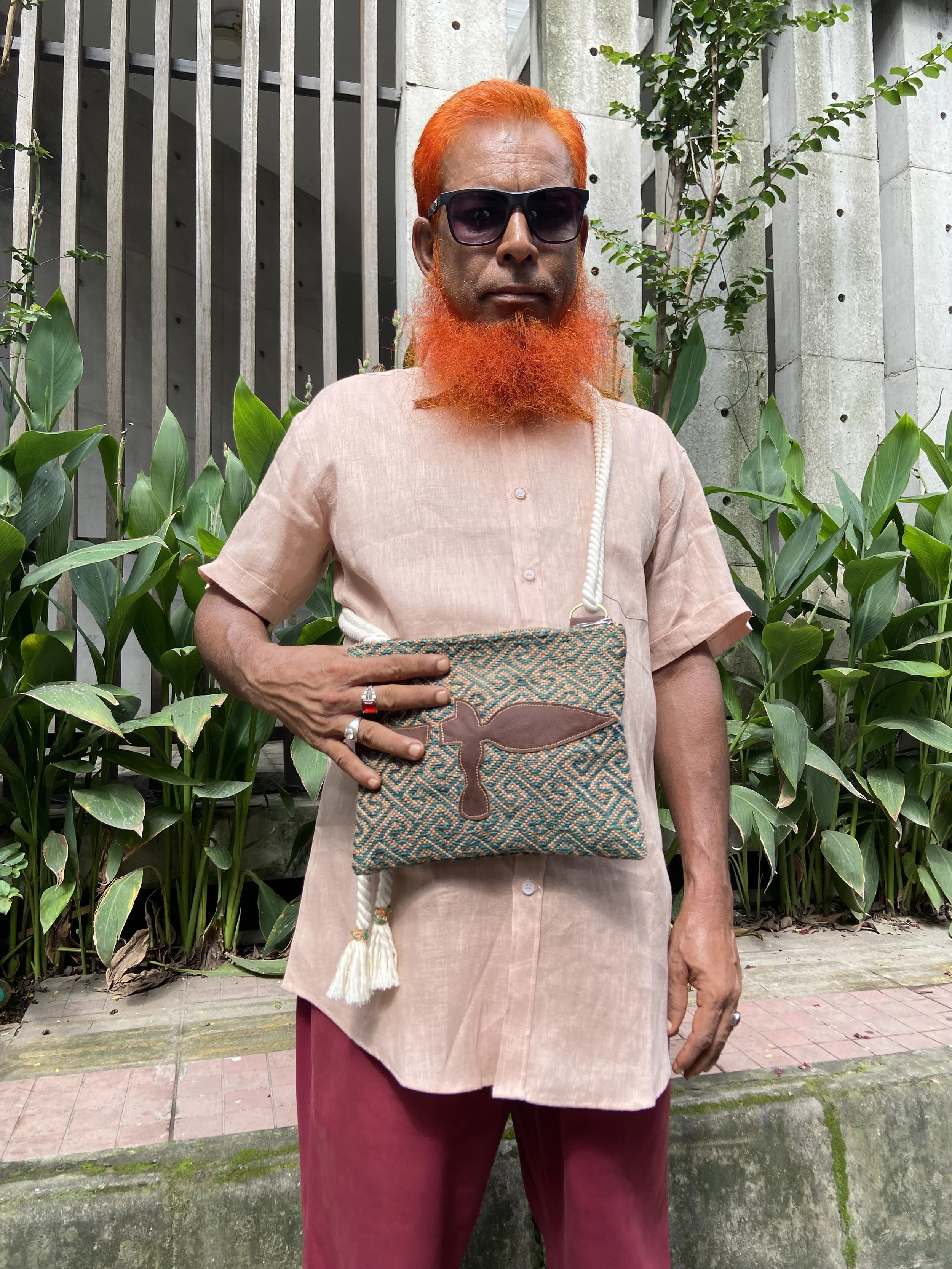
SK 01 Jute Messenger Pouch
A design study that came from necessity, as there is too much shit to carry around on a daily basis and pockets are inconsistent.
The Messenger Pouch was birthed from necessity, however became a canvas to explore regional material languages.
Jute is known as Bangladesh’s golden fibre. Being a vital part of Bangladesh's economy and cultural identity, the body of the bag provided the retail space to showcase the hand loomed fabric.
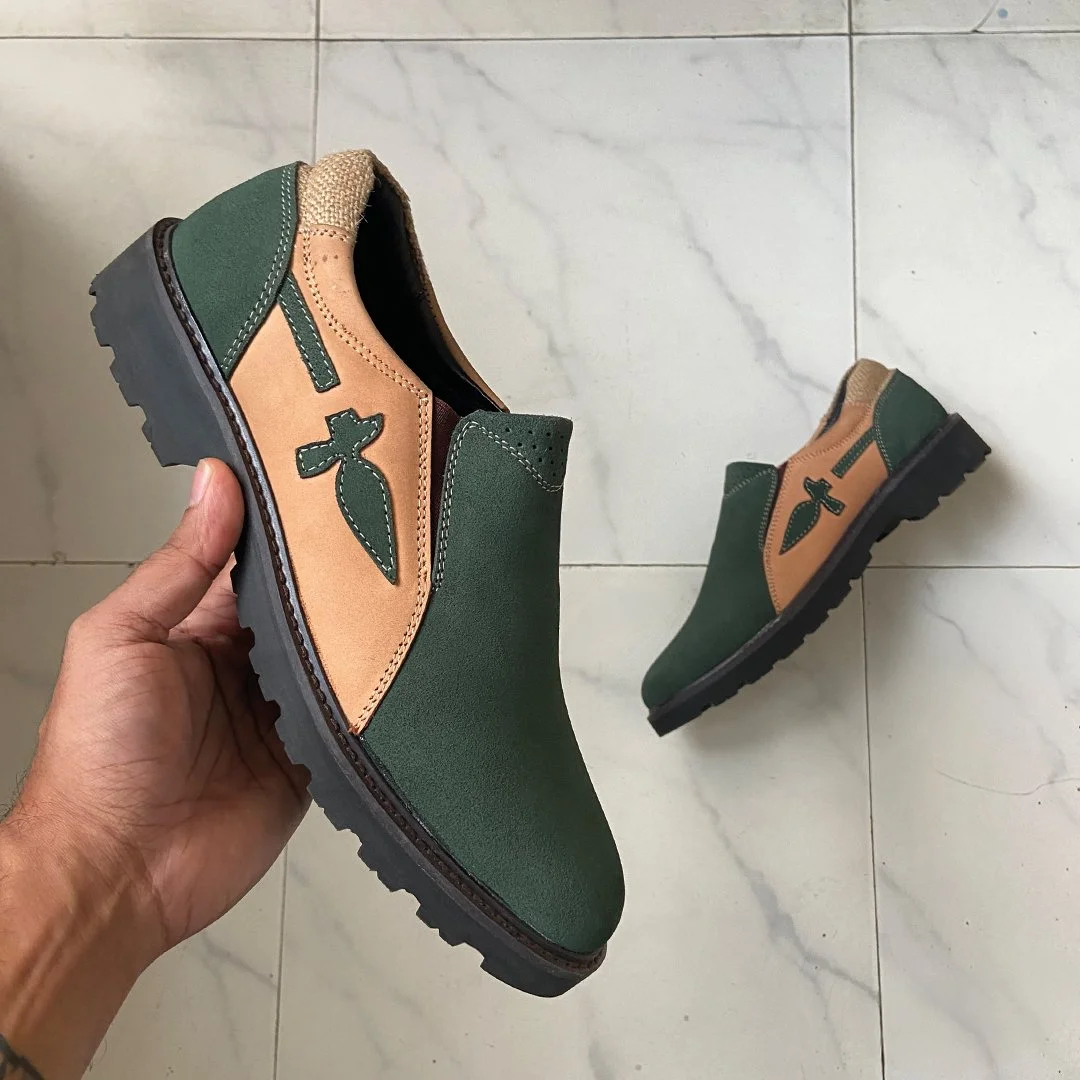
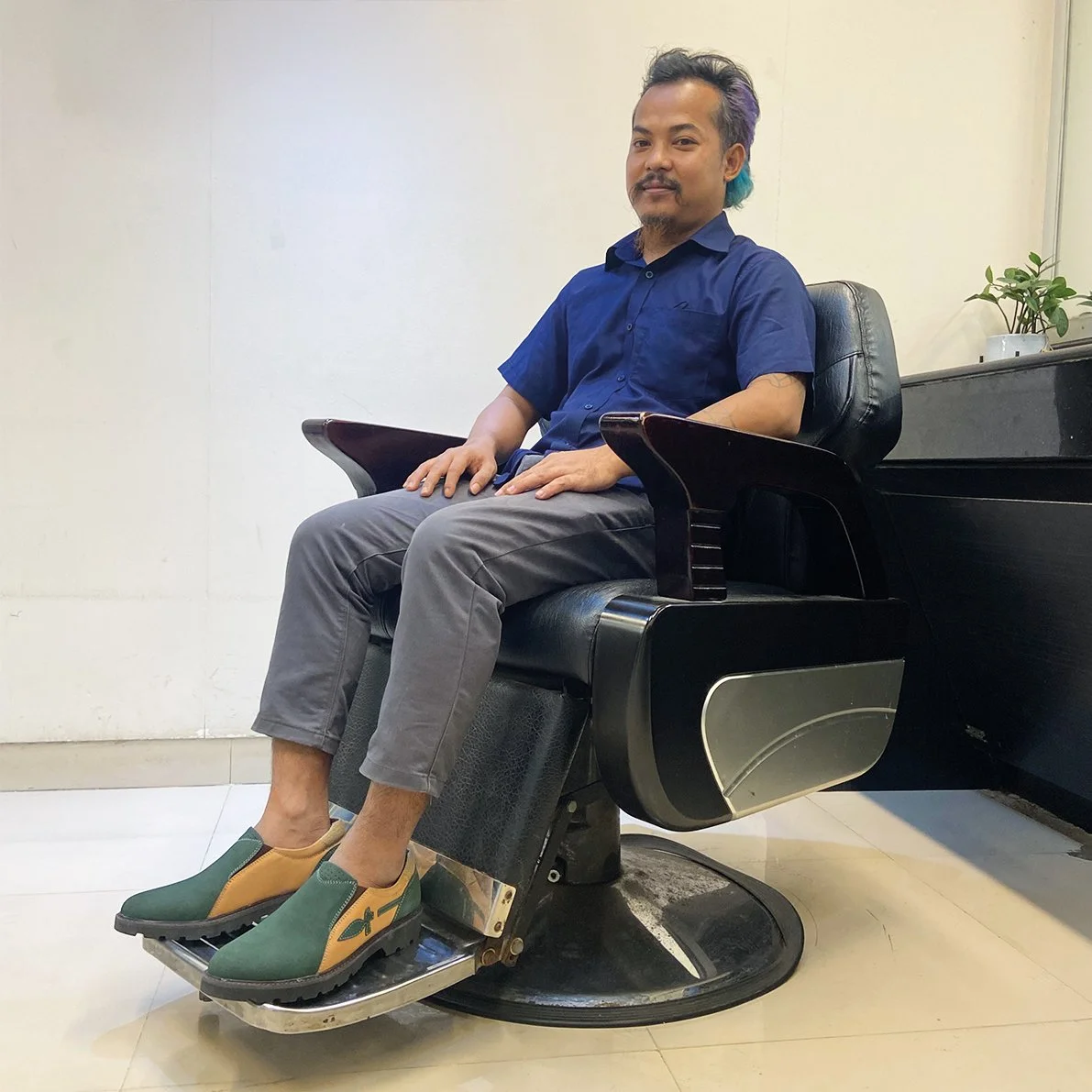
SK 02 Derby Slip On
With a large live stock population and a fresh supply of hides from un aliving cows every year, leather is one of the economic export cornerstones for Bangladesh.
Coupling leather with other regional Bengali materials, such as jute fabric and rubber soles, the SK 02 slip on derby utilises the footwear manufacturing potential here, to produce a unisex timeless silhouette that is comfy while is keeping you the flyest at any occasion.
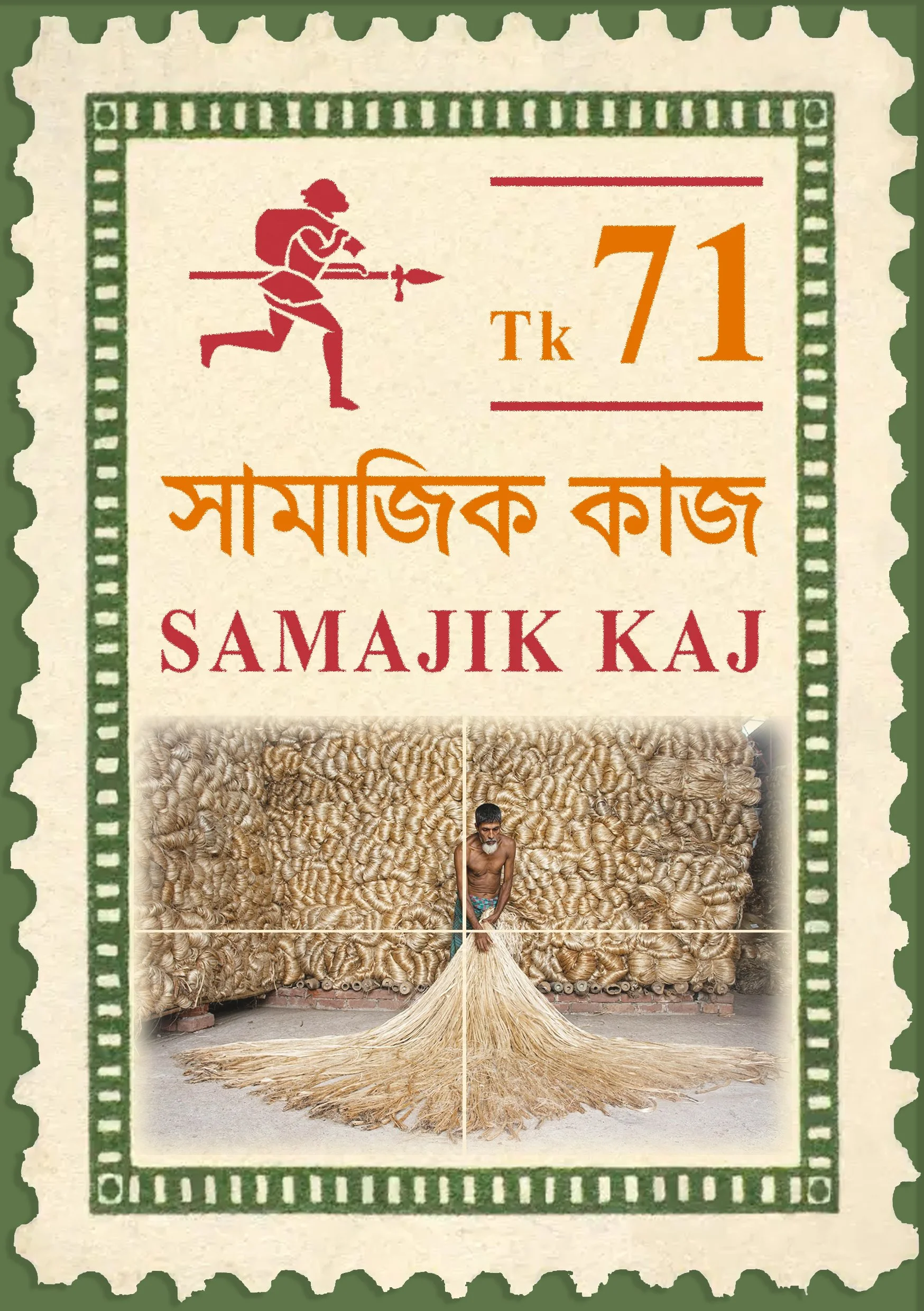
SK 03 Jute Information Postcard
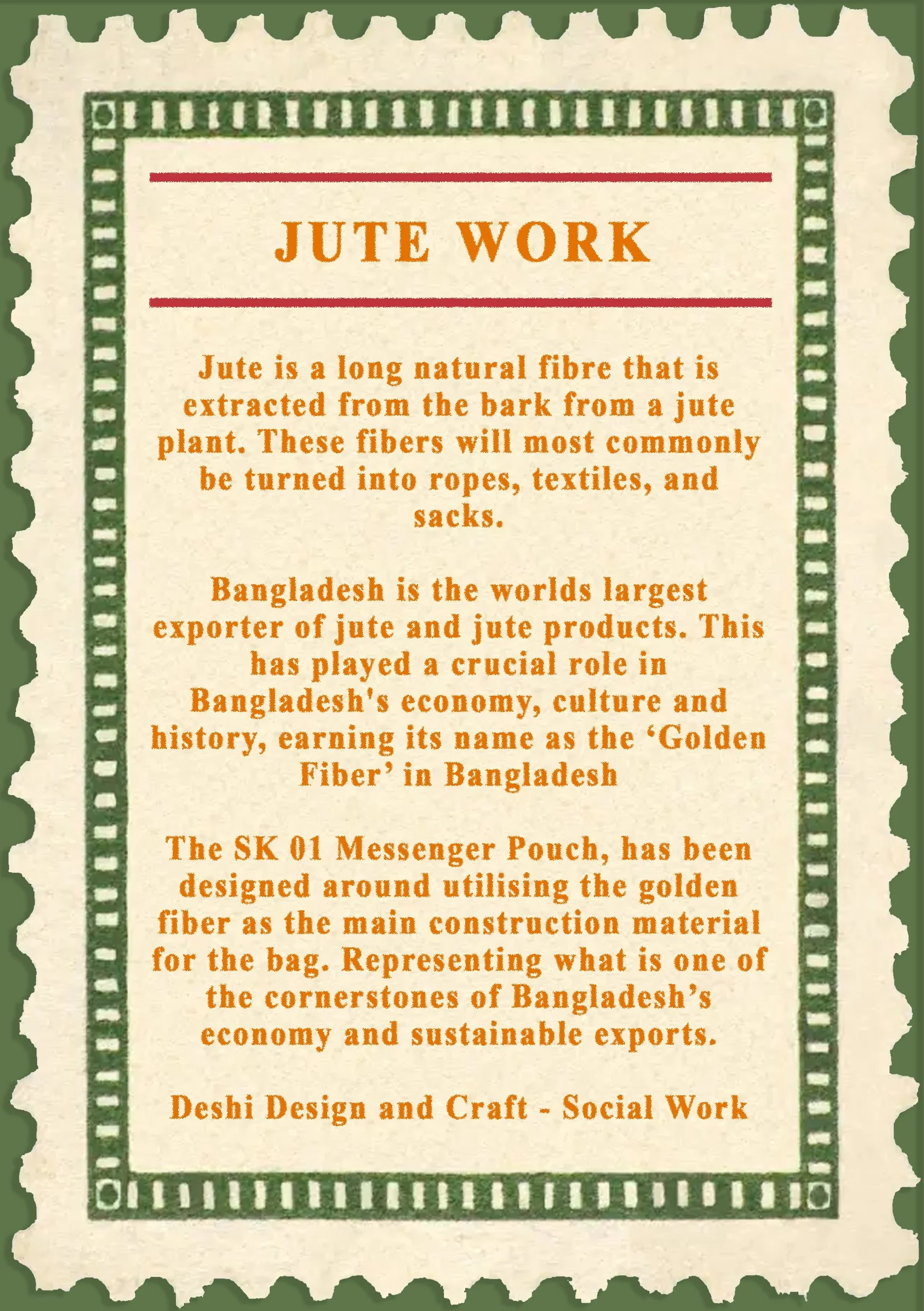
The origins of Samajik Kaj’s design language rooting from the Bengali post office, reference will still be made to this integral institution to Bangladesh’s liberation.
As a literal reference, postcards are produced to provide information on the materials and craft from the country. The designs were based on the original first eight post stamps designed by Biman Malik.
The SK 03 postcard provides information on the jute industry of Bangladesh.
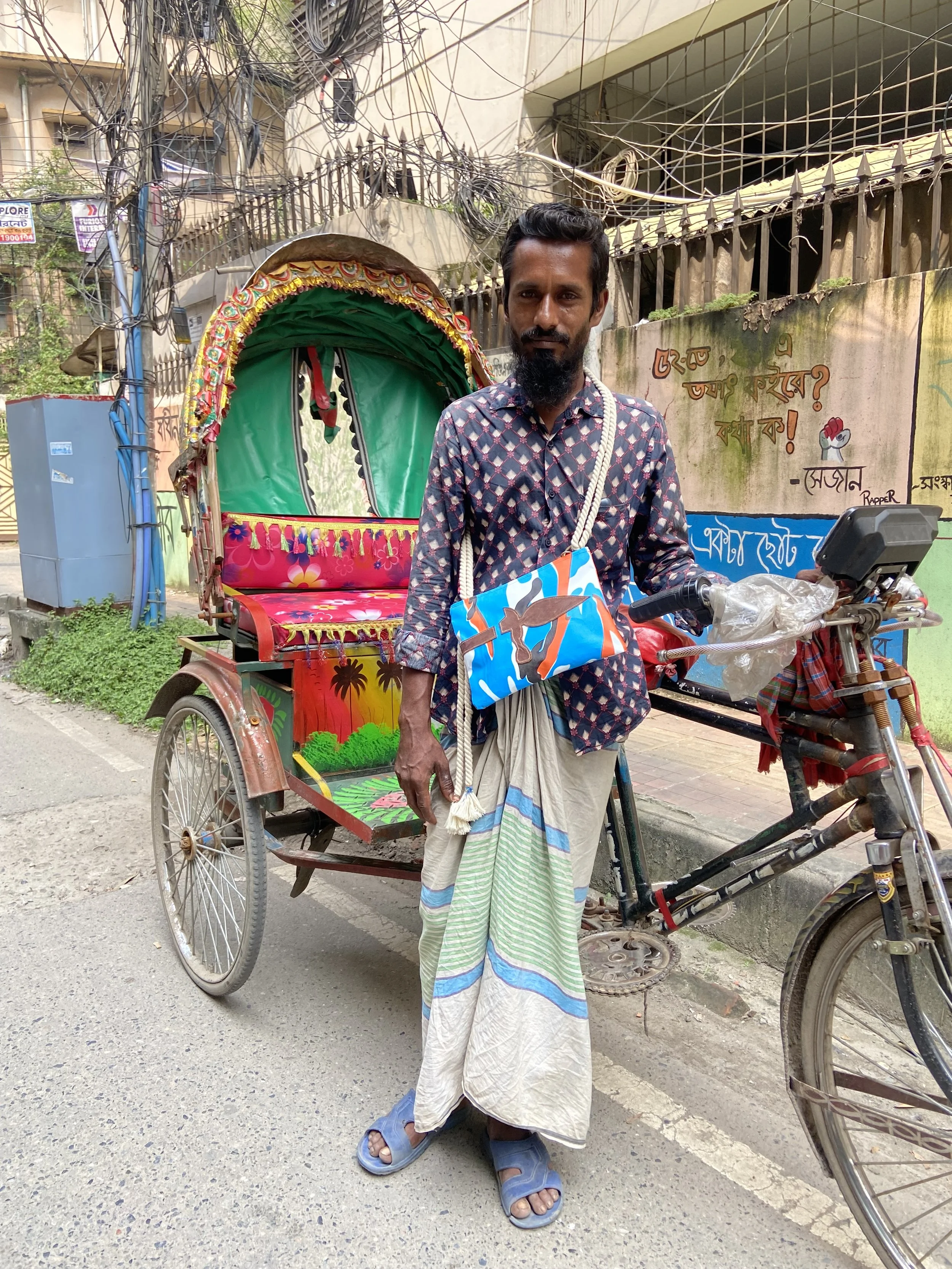
SK 05 Rickshaw Messenger Pouch
A continued design study from SK 01, the messenger pouch provided the ideal canvas to explore further material choices. Upcycling materials became the primary focus with this particular design development.
Rickshaws are part of the visual identity of Bangladesh. The canopies have to be durable, waterproof and visually striking to attract people. Discarded canopies made them ideal material to use for the body of the SK 02 Messenger Pouch.
SK 06 Frame Chair
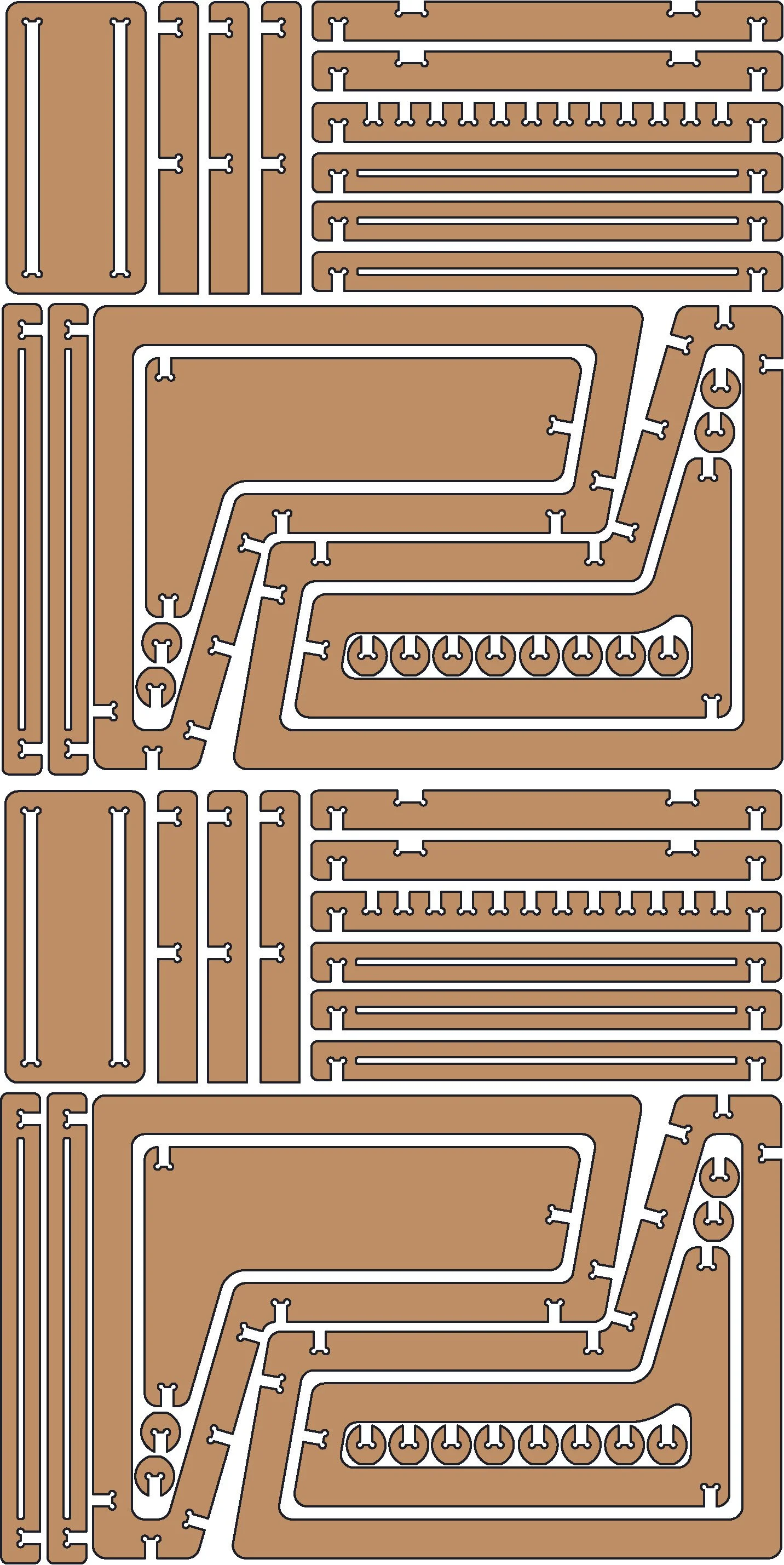
Carpentry is a staple in Bangladesh’s furniture production. You are never to far from a street with a carpenters workshop or showroom. This dictated that the frame of the chair needed to be made from wood.
The whole of a universal sized plywood board (2440mm x 1220mm) is utilised to produce two chairs and tables. The waste is absolute minimal.
However the frame is designed to support and showcase a single sheet of fabric. In this instance, jute was the fabric of choice. This can be interchanged, used saris or denim can be substituted instead of the jute.
No special tools are requires to assemble the chair, You just need your HANDS to slot the wood and thread the fabric.
SK 8 Dwip Gallery Exhibition, Haater Kaj
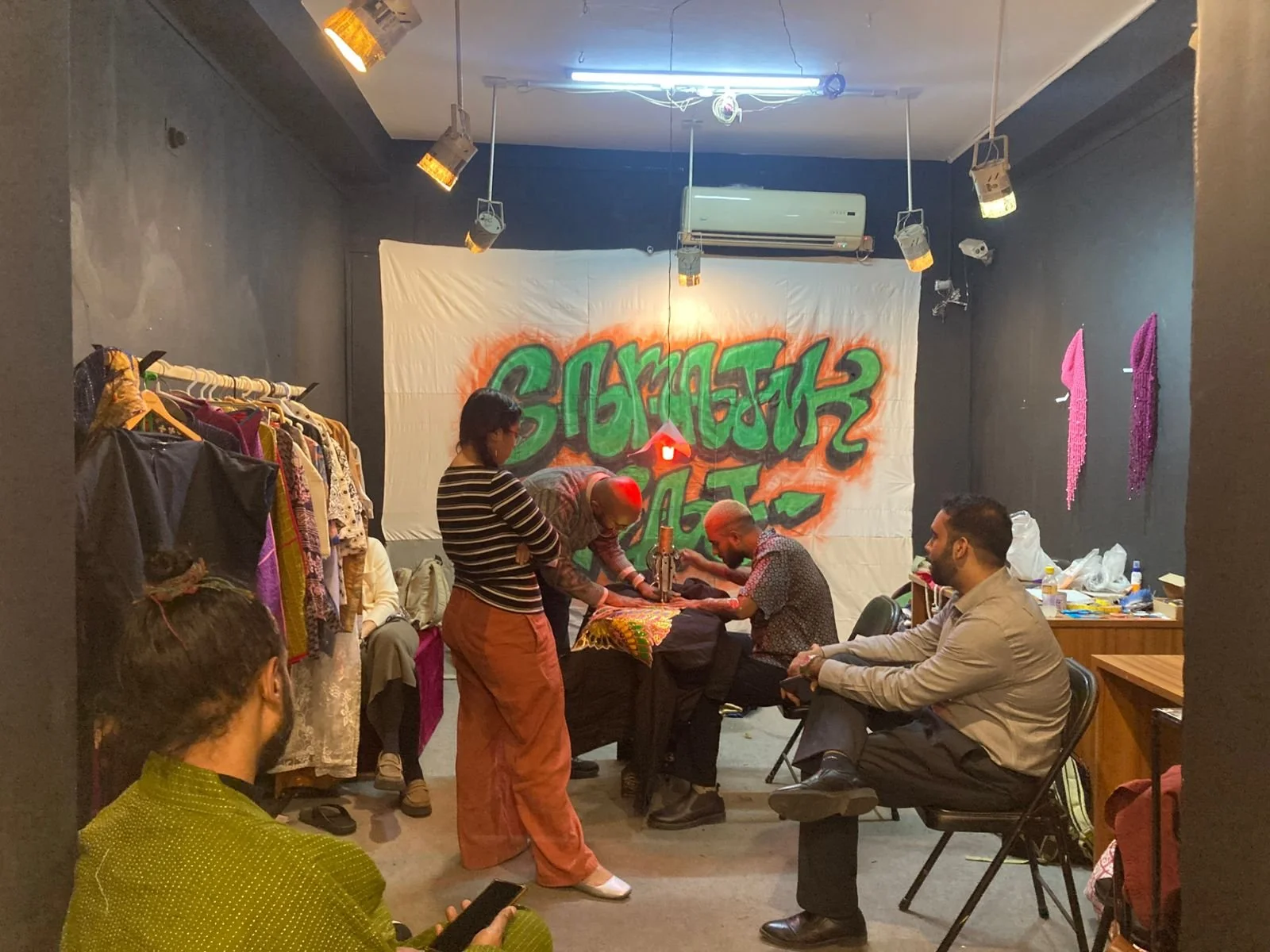
Samajik Kaj had the opportunity to take over Dwip gallery in Dhaka, between 29/11/25 till 09/12/25.
The exhibition called Haater Kaj, which translates into hand work, showcased the range of design studies form the Samajik Kaj catalogue.
Haater Kaj also wanted to bring you visitors into the processes of how a design study becomes a reality. A pop up studio was created in the exhibition, exposing visitors to process, hopefully this brought a greater appreciation on the everyday hands that are used, to craft the objects that you interact with on a daily basis.
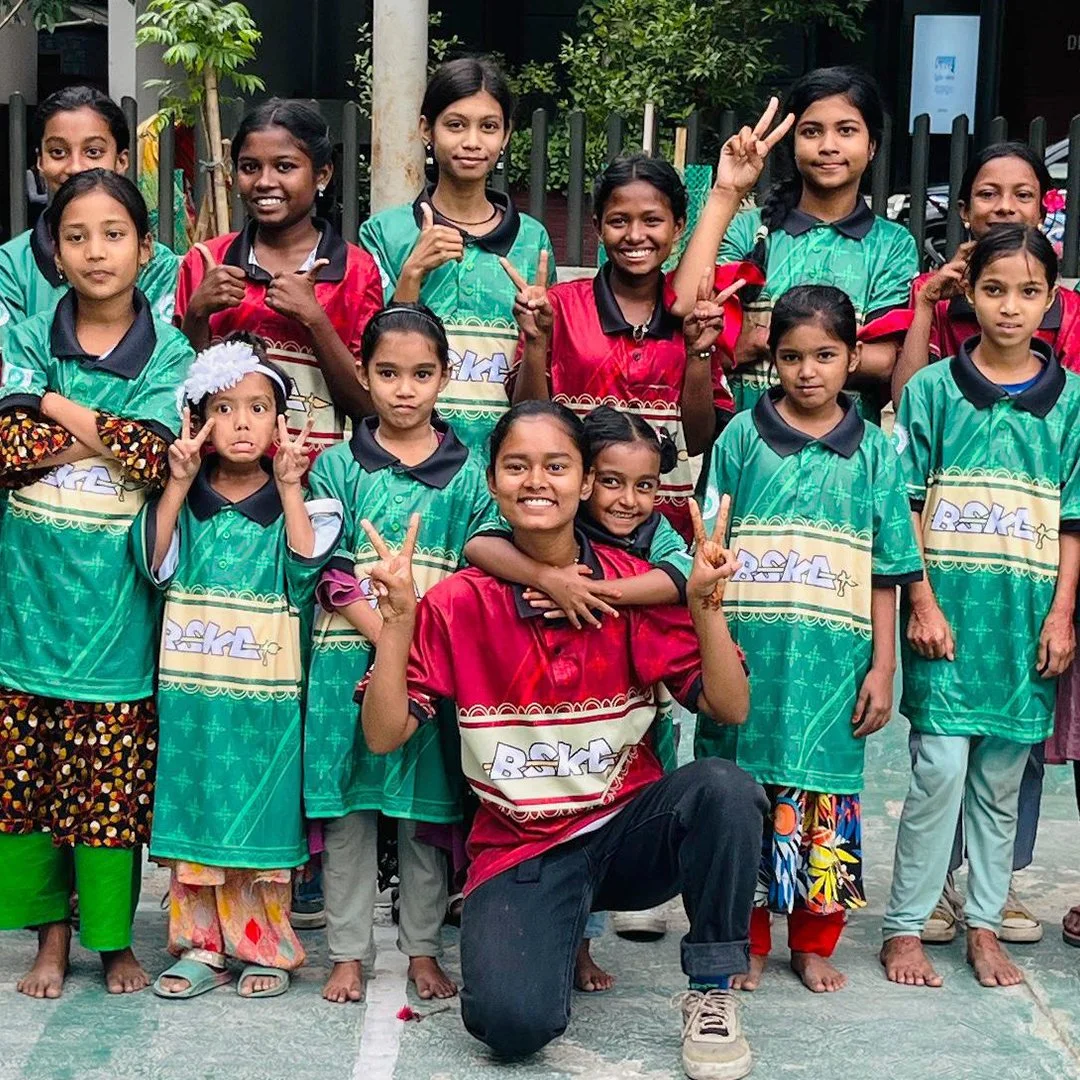
SK 09 BSKA Sports Shirts
The BSKA girls are some of the coolest kids around! Culture defying and defining, the skate programme has given the girls the opportunity to express their G ness! The girls now needed garms that matched their gully personas.
On special occasions, the girls would love to dress up in saris, however, this wouldn’t stop them from jumping onto their skateboards. The girls gliding around the skatepark while the saris flowing to match their effortless steez, was too powerful not to translate into a design language. This is the inspiration behind their new sports tops.
The tops have the form of the draped sari across the body, printed directly onto the fabric. The SK spear head, is used to create a motif, that is inspired by traditional saree patterns. Lace edges from blouses are then printed as a trim to accentuate the traditional sari design language.
The girls will now always have the feminine power that saris provide, to carry on carving their way through the streets of Dhaka and Bengali culture!